
Journal · · Updated · 4 min read
Acacia Retreat House - Case Study
Every time I finish a project, I say: this is my favorite project. However, this one is special to me. The house sits on a hill with a picturesque view over the San Francisco Bay Area. The top living floor has panoramic windows and opens the view to the (nearby) yacht club, water, and hills. You can feel crispy air even when the windows are closed.
The clients bought a 70’s house in 2018. The last renovation was made in the 90’s and the clients knew at first glance that they wanted to renovate. After living there for a couple of years, they got a clear idea of what wasn’t working for them and also gave birth to their second baby. On top of that, the pandemic had an impact too: the home office is an essential space now. The 3-bedroom 2-bathroom (3BD 2BA) house would need to expand.

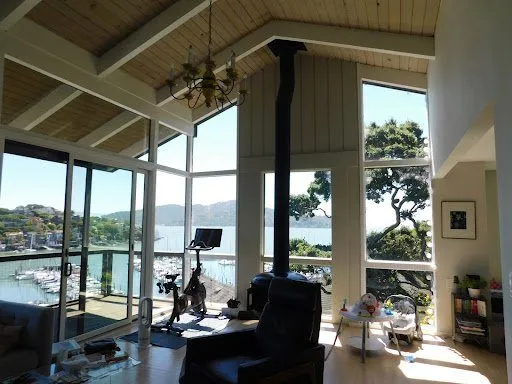
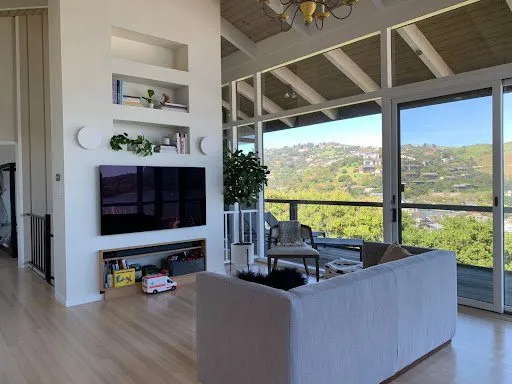
Due to the location, the hill creates a space between the slope and the top floor and that space was 6 feet high already. Just a bit of excavation and voilà — two bedrooms on the first floor are added. The upper floor has another quest: an inconvenient kitchen footprint and an objectionable sitting arrangement in the living room.
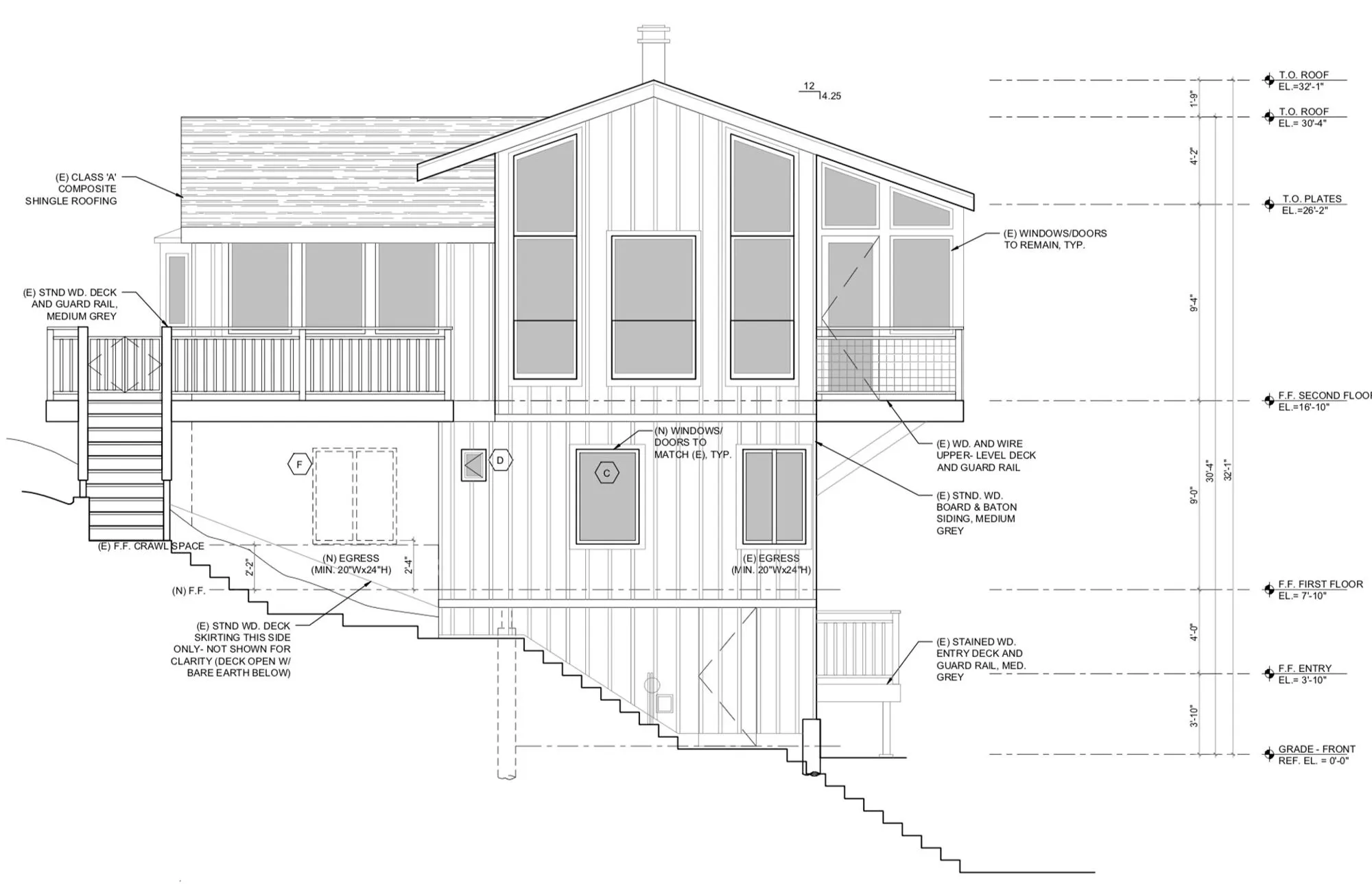
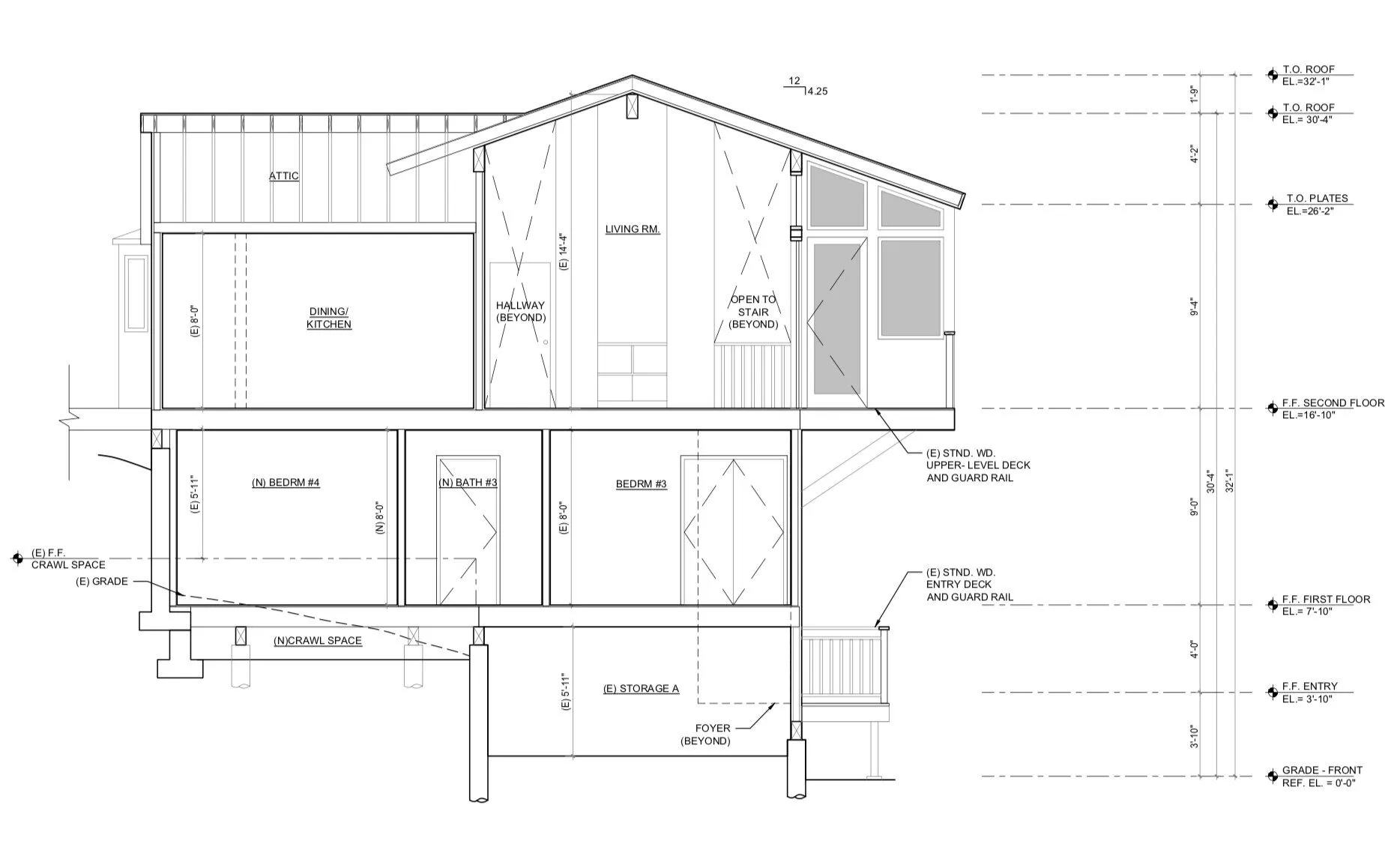
I started working on the project remotely from Chicago and soon the clients invited me to spend time in their home in California. It was an incredible experience to have the chance to live with the client and dive into their routines. I could see how exactly they used the space, what pieces were missing, and what didn’t work. I usually measure every space I design and then I build the whole house in 3d with all furniture, so the client can walk through the space in the 3d model and understand the space better than in just a 2d drawing. During the 3 weeks I spent in the house, I could measure every inch, and I built a precise model.
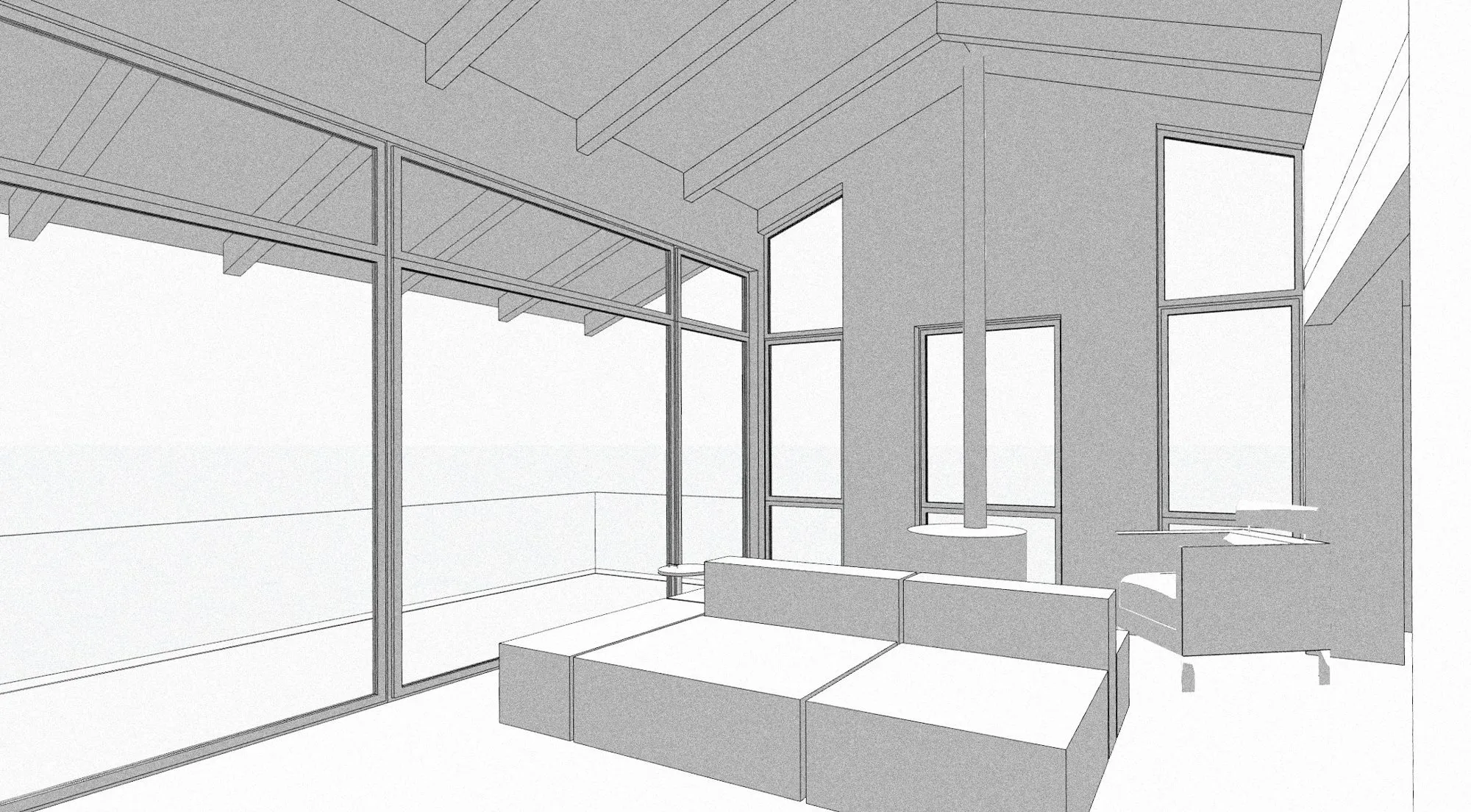
I discovered the major floor planning gaps, which were craving a solution. The first was the living room - three conflicting directions of entertaining zones. Originally the house had the fire place and the TV on opposite sides of the living room, so if you put a sofa towards the TV, how could you sit to enjoy the fire? And then there’ is the bay view on one side and dining table on the other. I came up with the idea of an ‘island’ in the center of the living room to allow access from every side and to save the space to circulate around. I was searching and had found a modular sofa, which is basically a variety of the rectangular units. I studied all the sizes the manufacturer had available and built over twenty combinations until I found the one which worked.
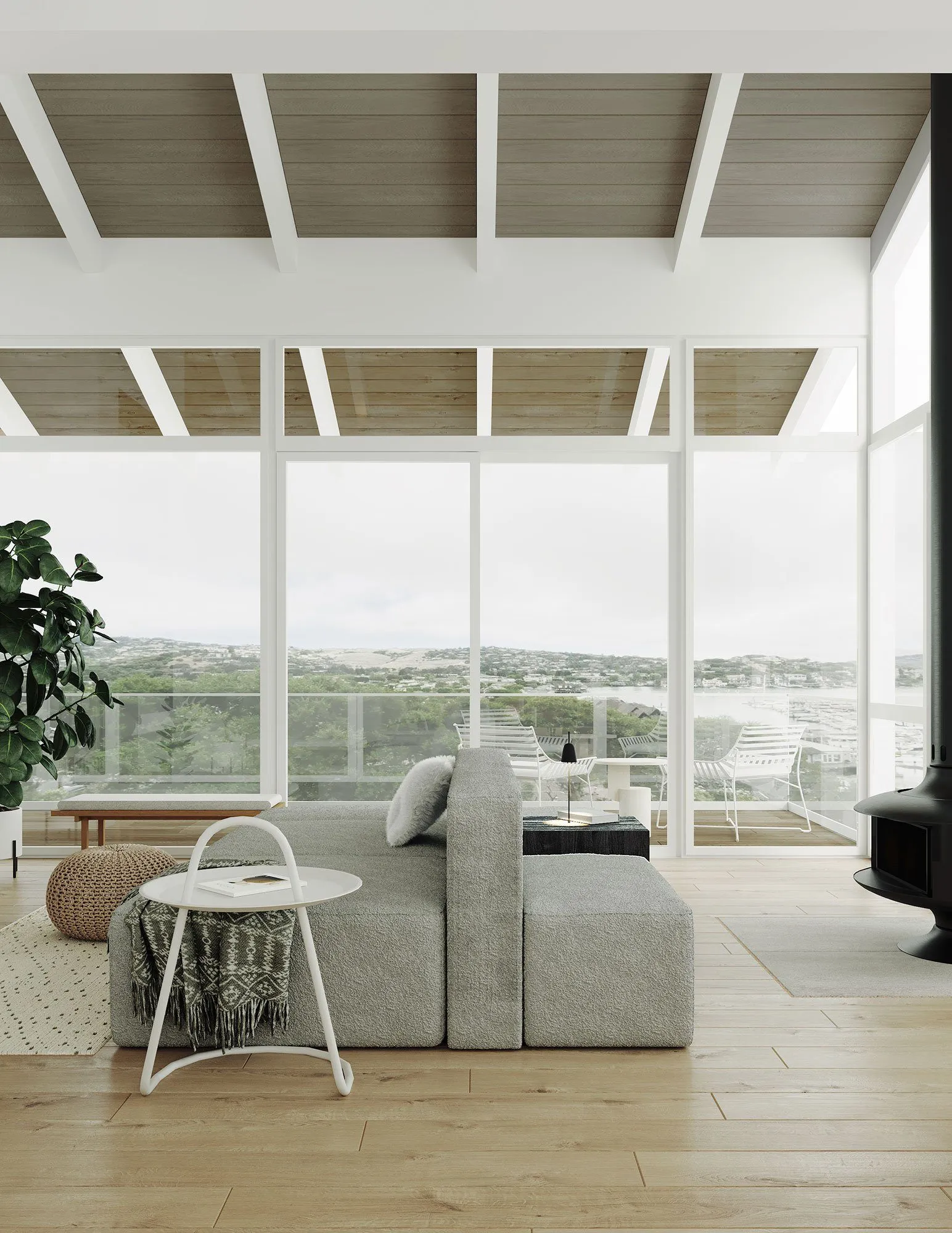
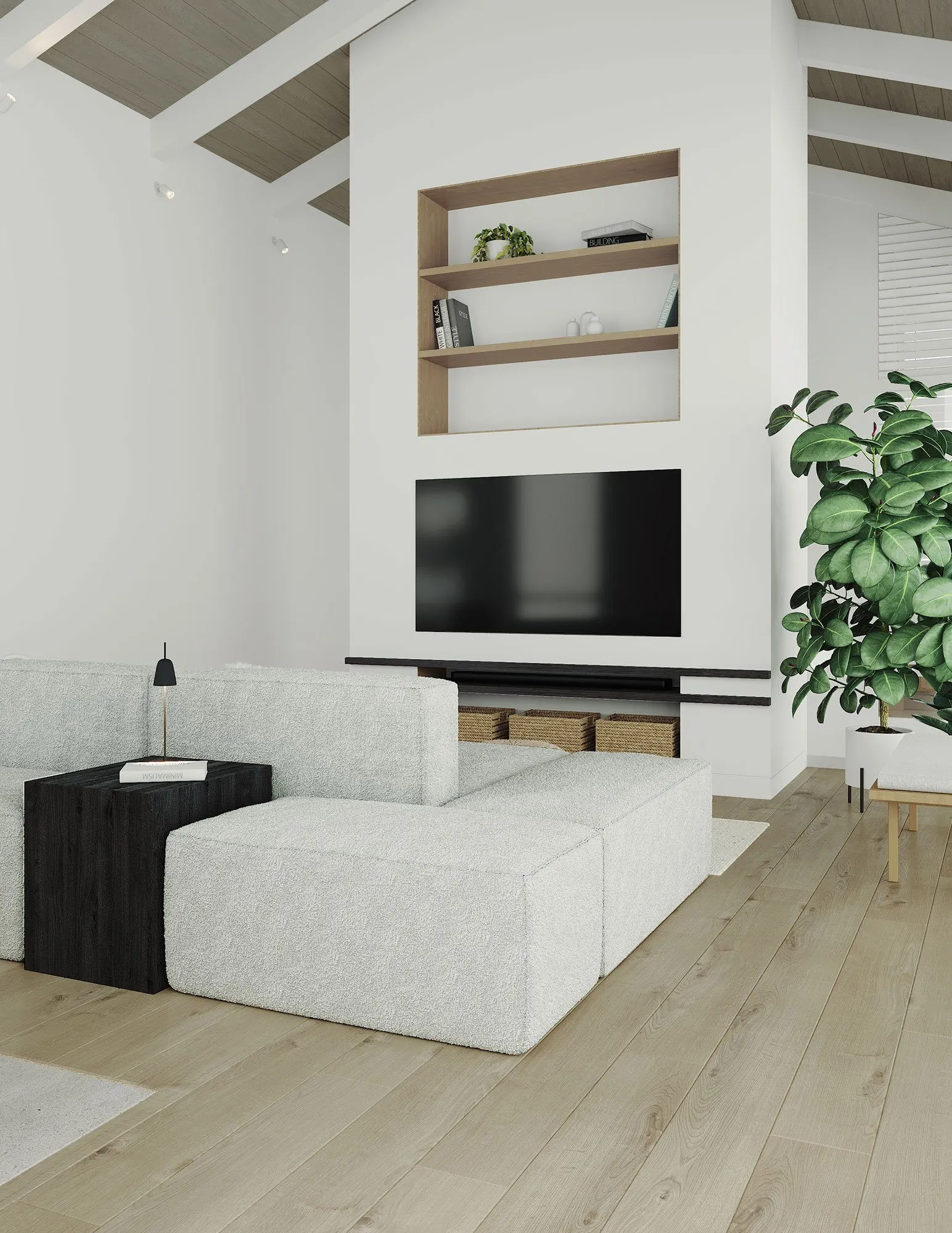
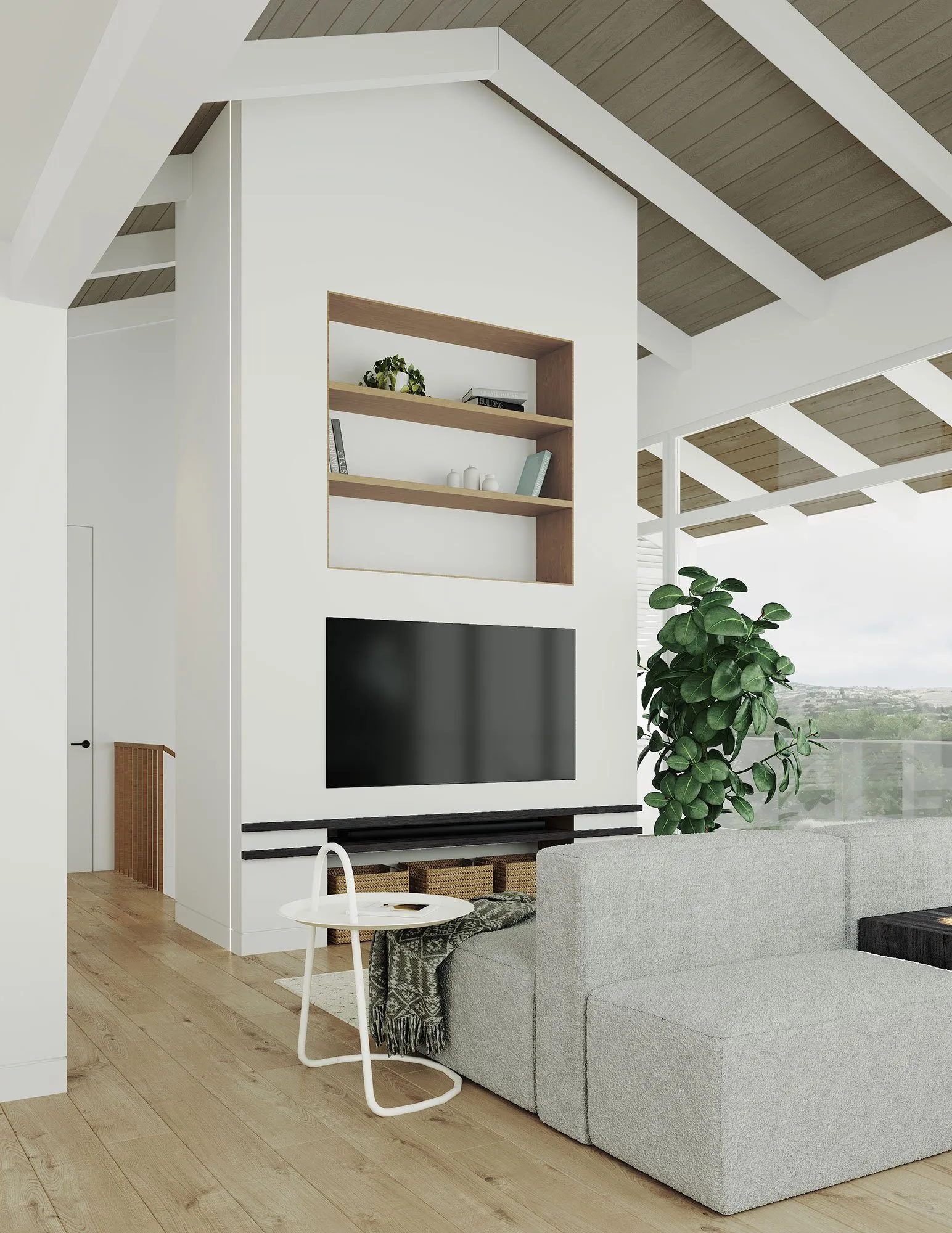
The combination allowed the client the flexibility of sitting on all four sides. Despite that, the sofa unlocks into independent poufs which can be spread around the living room in the event of a home party.
The master bedroom is 225 sq.ft, but it didn’t have a closet. I had to find space for a California king bed and for a master closet in only 225 sq ft. The bedroom has an incredible view out to the hill and I suggested turning the bed towards the window. That bed position allows us to see the view outside the first thing in the morning. I moved the bed as close as possible to gain a space behind for a closet. We decided not to build any walls, to not lose another 5 inches and we used the tallest modular closet units available on the market. Therefore, I got a walk-in closet behind the headboard where the headboard is on the back side of the closet.
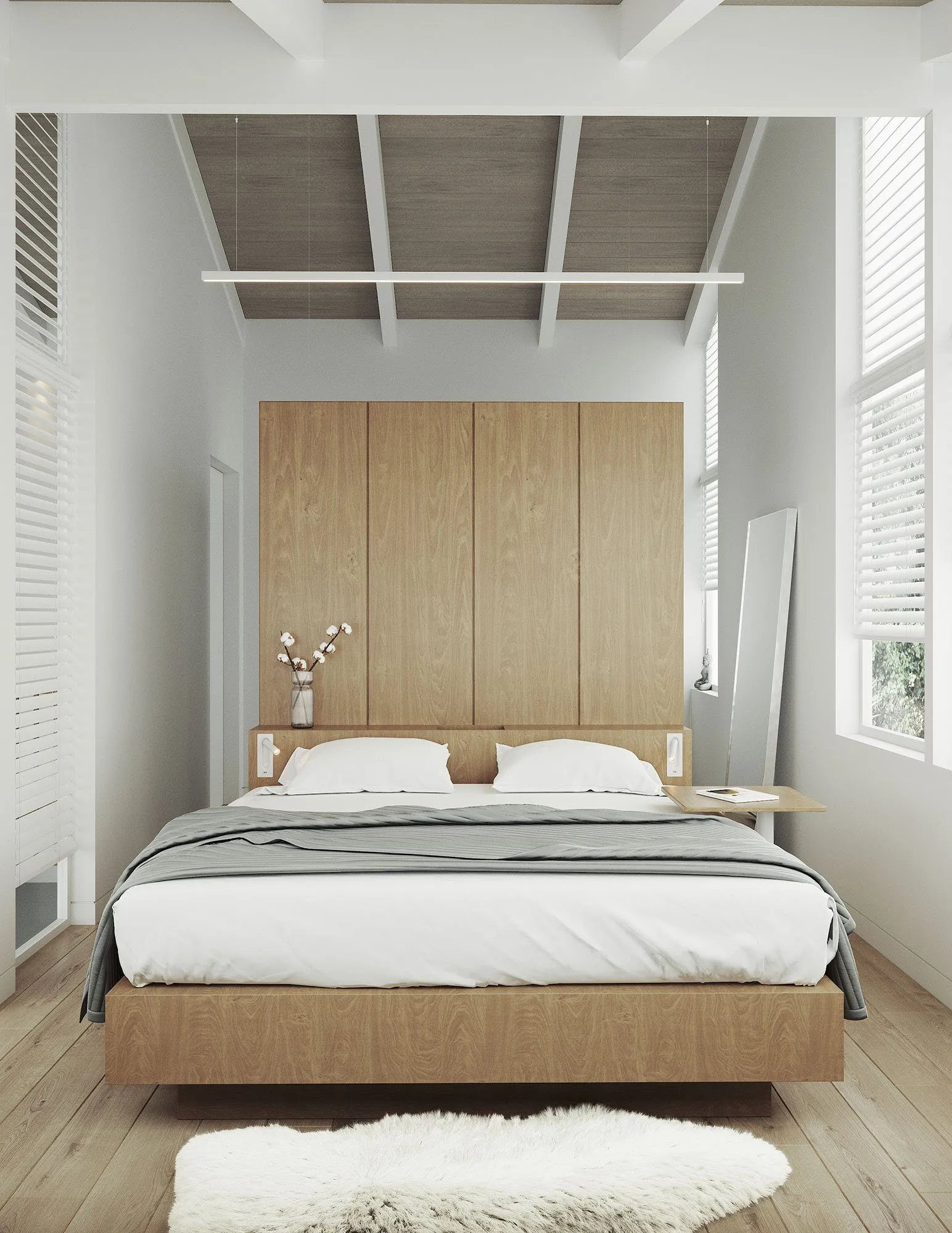
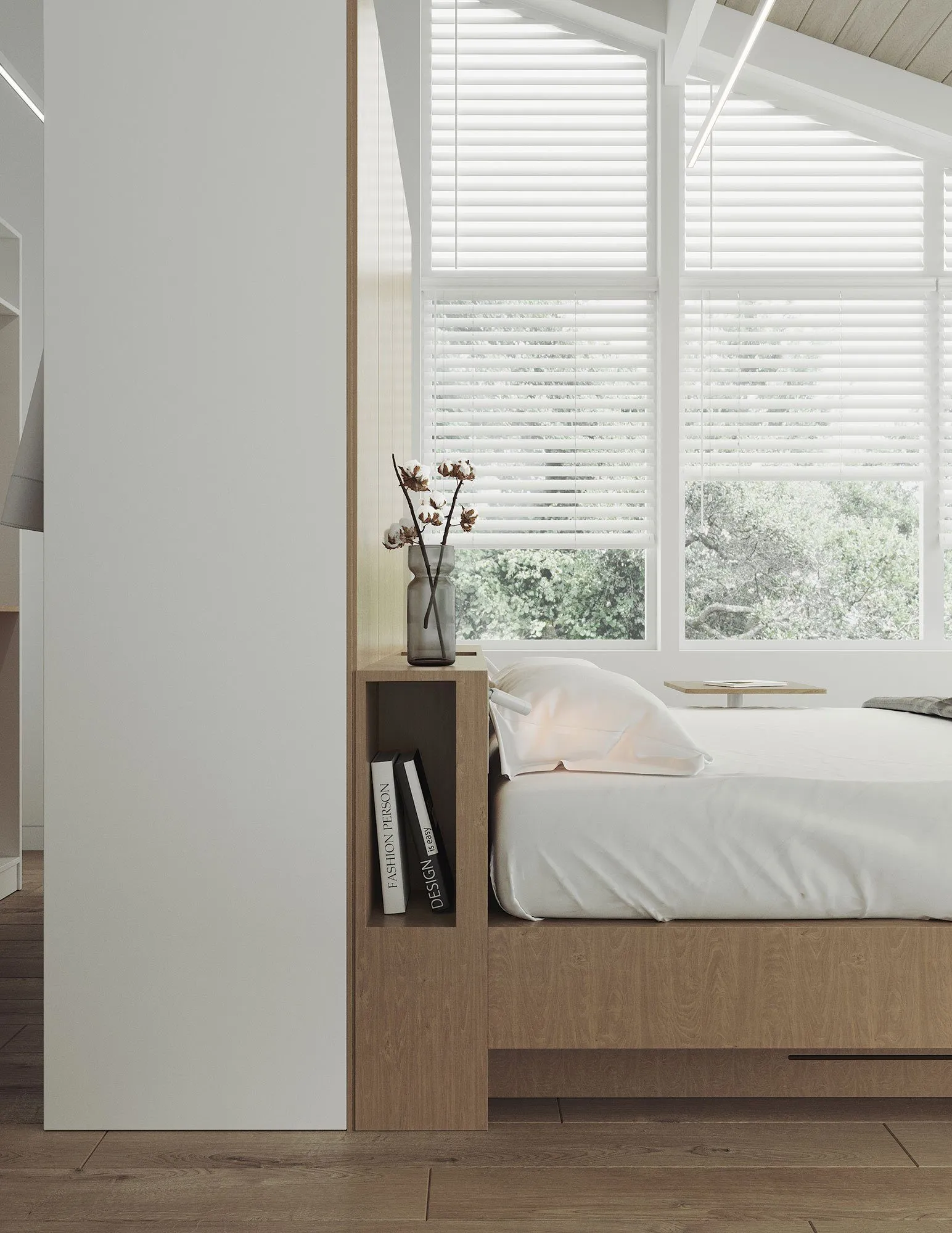
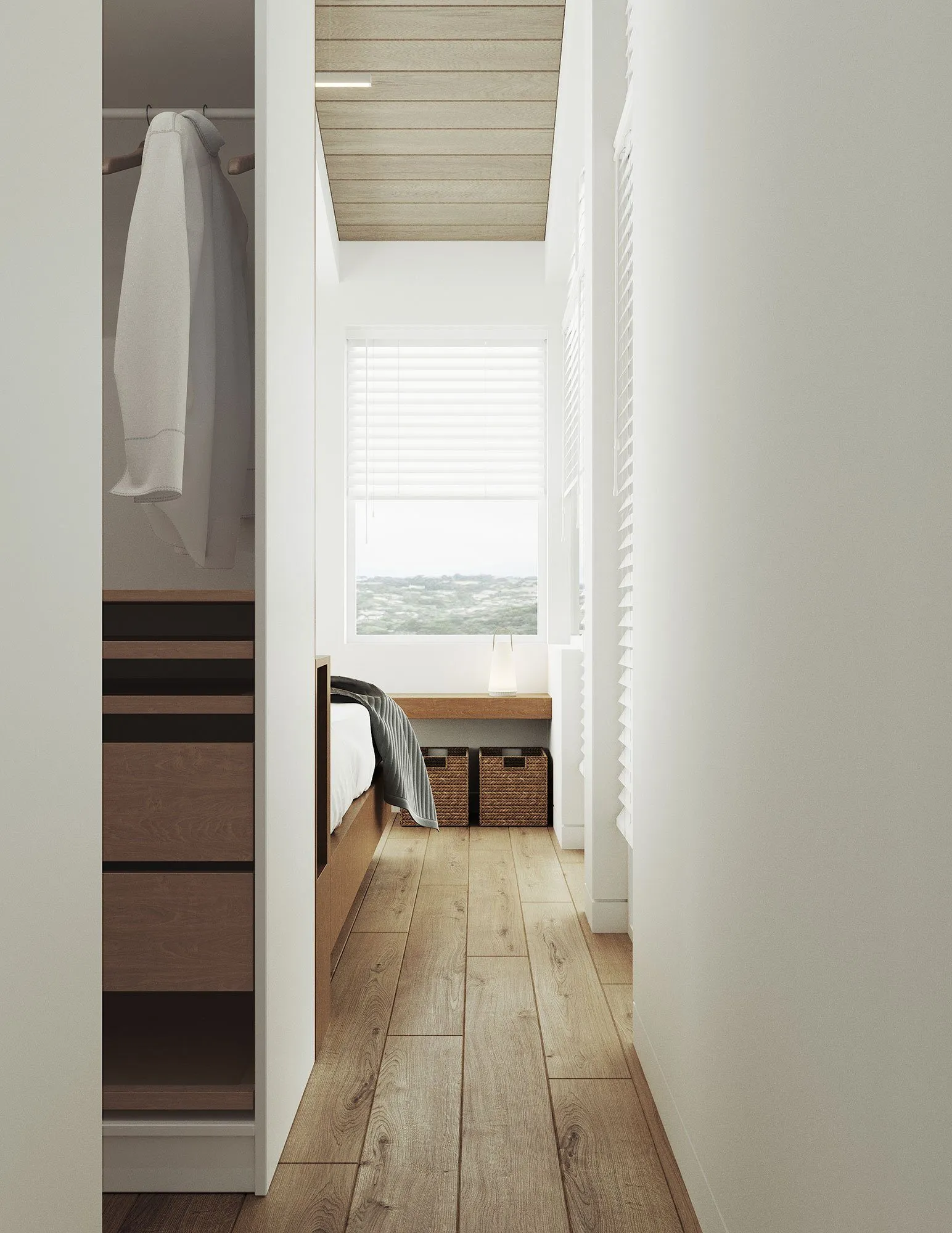
While I was working on the project I suggested 3 different style directions, each had personal textures and features. The client chose the natural pallet with modern textures and black graphic accents. We used white oak as a main material and gray ceramic granite as a reminiscence of concrete. I wanted to embrace the modern look of the house while emphasizing the 70’s architecture.
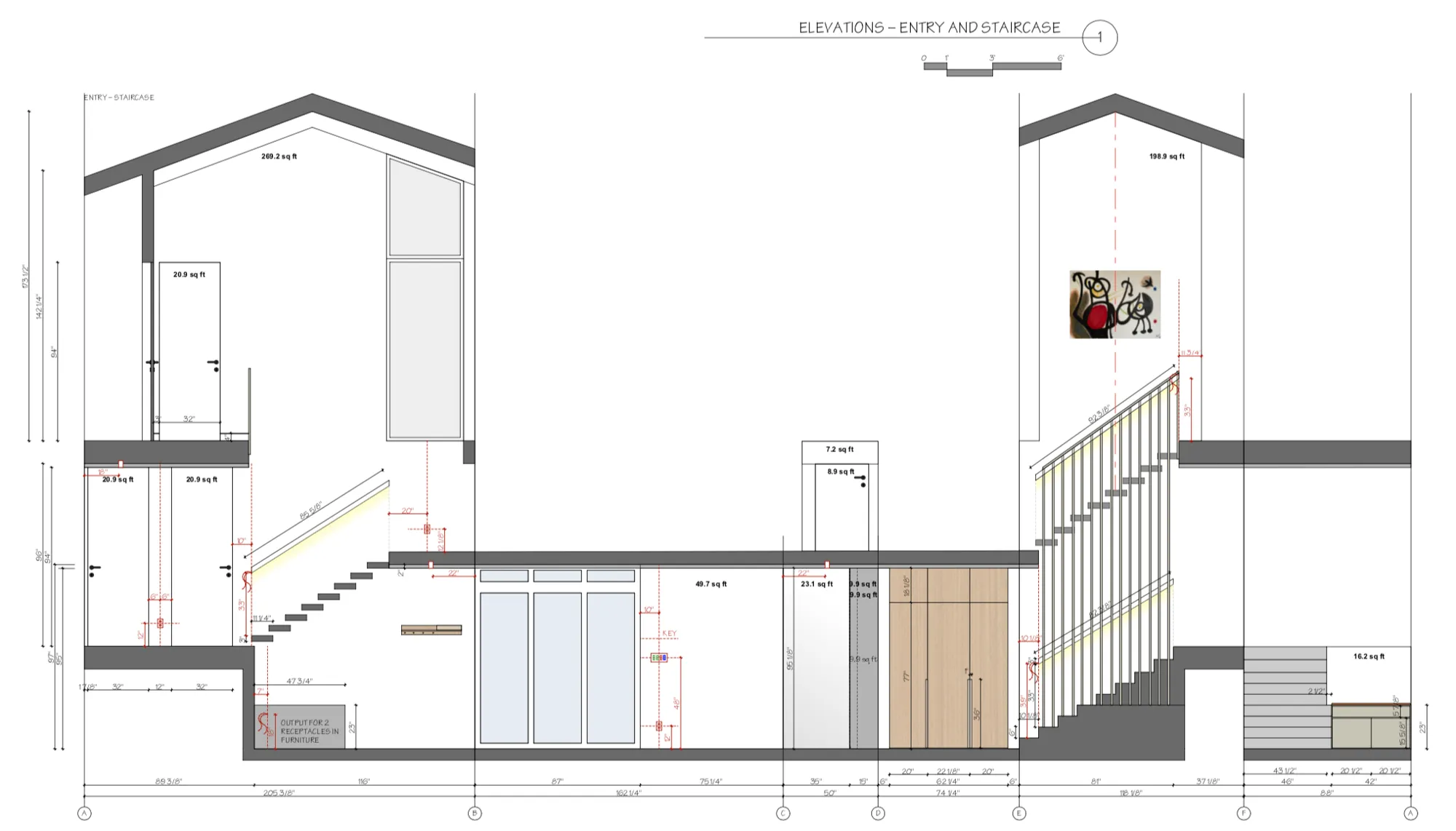
By the end of the project, I gave the clients all directions and specified every item with prices, so the client could see the entire budget in advance. For the construction set, I provided all the floor plans and elevations for each wall with finishes and receptacles, so the contractor can perfectly execute the design. Also, I can’t emphasize enough how important the photorealistic renderings are! They give the whole picture of the project and I produce them as precisely as reality, so the contractor can rely on them as a construction aid.
The interior design project gives not only the aesthetic appearance, but it also gives solutions for problem areas by reducing ambiguity in the organization and use of a space. I strive to find a solution for every space and to provide value through functionality and design.